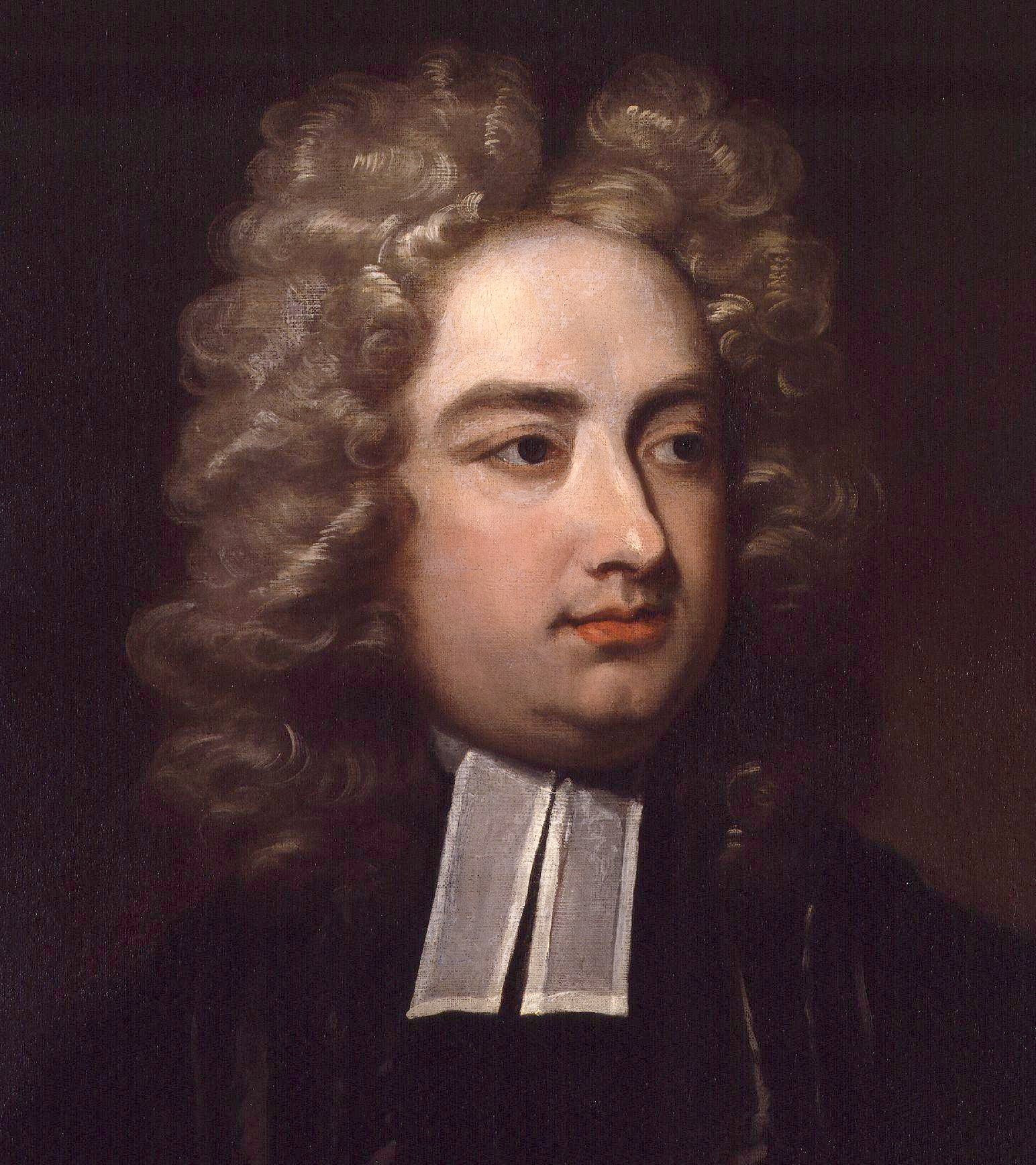
Jonathan Swift najznámejšie citáty

„Každý si želá dlho žiť, ale nikto nechce byť starý.“
Prisudzované výroky
Zdroj: [KOTRMANOVÁ, Milada.: Perly ducha. Ostrava: Knižní expres, 1996 ISBN 80-902272-1-X]
„Jeden nepriateľ ťa môže zraniť skôr, ako desať priateľov spraví pre teba niečo dobré.“
Prisudzované výroky
Zdroj: [KOTRMANOVÁ, Milada.: Perly ducha. Ostrava: Knižní expres, 1996 ISBN 80-902272-1-X]
Jonathan Swift Citáty o ľuďoch
Jonathan Swift Citáty o živote
„Drobné starosti stačia na to, aby nám otrávili život, ak nemáme veľké.“
Prisudzované výroky
Zdroj: [KOTRMANOVÁ, Milada.: Perly ducha. Ostrava: Knižní expres, 1996 ISBN 80-902272-1-X]
Jonathan Swift citáty a výroky
Prisudzované výroky
Zdroj: [KOTRMANOVÁ, Milada.: Perly ducha. Ostrava: Knižní expres, 1996 ISBN 80-902272-1-X]
„Dokiaľ nevyhrávam, samozrejme že plačem, pretože karty sú zlé zamiešané.“
Prisudzované výroky
Zdroj: [KOTRMANOVÁ, Milada.: Perly ducha. Ostrava: Knižní expres, 1996 ISBN 80-902272-1-X]
„Existujú márniví muži, ktorí sú hrdí na tie, ktoré im nasadzujú parohy.“
Varianta: Jestvujú márniví muži, ktorí sú hrdí na tých, čo im nasadzujú parohy.
Jonathan Swift: Citáty v angličtine
Imitation of Horace, book ii. Sat. 6.; reported in Bartlett's Familiar Quotations, 10th ed. (1919)
Thoughts on Various Subjects from Miscellanies (1711-1726)
“You beat your pate, and fancy wit will come;
Knock as you please, there's nobody at home.”
On a Dull Writer, reported in John Hawkesworth, The Works of Jonathan Swift, D.D., Dean of St. Patrick's, Dublin (1754), p. 265. Alternately attributed to Alexander Pope by Bartlett's Quotations, 10th Edition (1919). Compare: "His wit invites you by his looks to come, But when you knock, it never is at home", William Cowper, Conversation, line 303
Disputed
“She pays him in his own coin.”
Polite Conversation (1738), Dialogue 3
“As love without esteem is volatile and capricious; esteem without love is languid and cold.”
John Hawkesworth, The Adventurer, No. 36 (10 March, 1753)
Misattributed
“…one enemy can do more hurt, than ten friends can do good.”
Journal to Stella (30 June, 1711)
Polite Conversation (1738), Dialogue 3
“Invention is the talent of youth, and judgment of age…”
Thoughts on Various Subjects from Miscellanies (1711-1726)
Jonathan Swift kniha A Tale of a Tub
Preface
A Tale of a Tub (1704)
“I hate nobody: I am in charity with the world.”
Polite Conversation (1738), Dialogue 1
Jonathan Swift kniha The Battle of the Books
The Battle of the Books, preface (1704)
“I'll give you leave to call me anything, if you don't call me "spade."”
Polite Conversation (1738), Dialogue 2
Thoughts on Various Subjects from Miscellanies (1711-1726)
“She's no chicken; she's on the wrong side of thirty, if she be a day.”
Polite Conversation (1738), Dialogue 1
“I know Sir John will go, though he was sure it would rain cats and dogs.”
Polite Conversation (1738), Dialogue 2
“There is none so blind as they that won't see.”
Polite Conversation (1738), Dialogue 3
Jonathan Swift kniha A Treatise on Good Manners and Good Breeding
A Treatise on Good Manners and Good Breeding (1754, published posthumously)
Jonathan Swift kniha A Tale of a Tub
A Tale of a Tub (1704)
“Fingers were made before forks, and hands before knives.”
Polite Conversation (1738), Dialogue 2
“T is happy for him that his father was before him.”
Polite Conversation (1738), Dialogue 3
“The Bulk of mankind is as well equipped for flying as thinking.”
Thoughts on Various Subjects from Miscellanies (1711-1726)
Jonathan Swift kniha Les Voyages de Gulliver
Voyage to Laputa, Ch. 5
Gulliver's Travels (1726)
Jonathan Swift kniha A Tale of a Tub
Preface
A Tale of a Tub (1704)
“Censure is the tax a man pays to the public for being eminent.”
Thoughts on Various Subjects from Miscellanies (1711-1726)
Jonathan Swift kniha Cadenus and Vanessa
Cadenus and Vanessa (1713)
Jonathan Swift kniha A Treatise on Good Manners and Good Breeding
A Treatise on Good Manners and Good Breeding
Conversation
“He made it a part of his religion never to say grace to his meat.”
Jonathan Swift kniha A Tale of a Tub
Sect. 11
A Tale of a Tub (1704)


