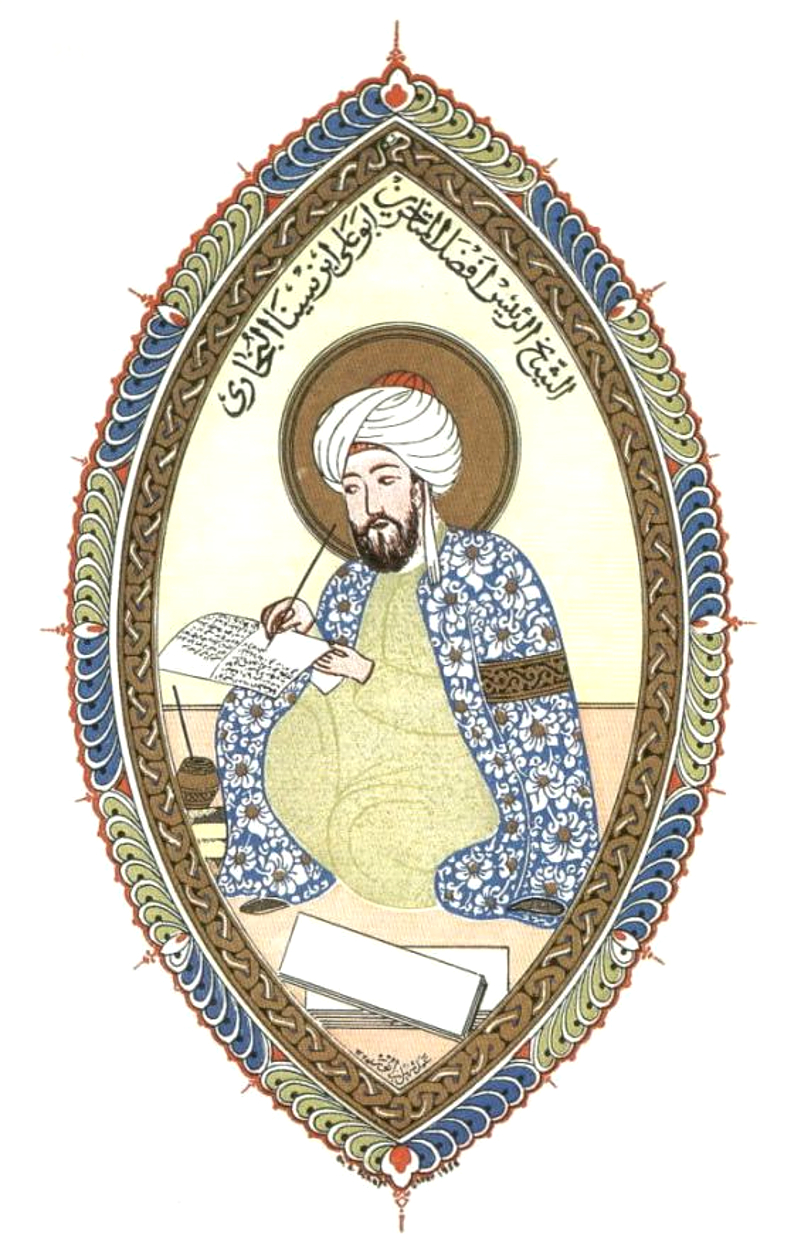
Avicenna najznámejšie citáty

Avicenna citáty a výroky
Avicenna: Citáty v angličtine
"On Medicine, (c. 1020) http://www.fordham.edu/halsall/source/1020Avicenna-Medicine.html <br class="br">Kontext: The knowledge of anything, since all things have causes, is not acquired or complete unless it is known by its causes. Therefore in medicine we ought to know the causes of sickness and health. And because health and sickness and their causes are sometimes manifest, and sometimes hidden and not to be comprehended except by the study of symptoms, we must also study the symptoms of health and disease. Now it is established in the sciences that no knowledge is acquired save through the study of its causes and beginnings, if it has had causes and beginnings; nor completed except by knowledge of its accidents and accompanying essentials. Of these causes there are four kinds: material, efficient, formal, and final.
“An ignorant doctor is the aide-de-camp of death.”
As quoted in Familiar Medical Quotations (1968) by Maurice B. Strauss
"On Medicine, (c. 1020) http://www.fordham.edu/halsall/source/1020Avicenna-Medicine.html <br class="br">Kontext: The knowledge of anything, since all things have causes, is not acquired or complete unless it is known by its causes. Therefore in medicine we ought to know the causes of sickness and health. And because health and sickness and their causes are sometimes manifest, and sometimes hidden and not to be comprehended except by the study of symptoms, we must also study the symptoms of health and disease. Now it is established in the sciences that no knowledge is acquired save through the study of its causes and beginnings, if it has had causes and beginnings; nor completed except by knowledge of its accidents and accompanying essentials. Of these causes there are four kinds: material, efficient, formal, and final.
“The world is divided into men who have wit and no religion and men who have religion and no wit.”
This was declared without citation to have been attributed to Avicenna in A Rationalist Encyclopaedia : A Book of Reference on Religion, Philosophy, Ethics, and Science (1950), by Joseph McCabe, p. 43; it was also later wrongly attributed to Averroes in The Atheist World (1991) by Madalyn Murray O'Hair, p. 46. It actually originates as a statement by the atheist Al-Maʿarri, earlier translated into English in A Short History of Freethought Ancient and Modern (1906) by John Mackinnon Robertson, Vol. I, Ch. VIII : Freethought under Islam, p. 269, in the form: "The world holds two classes of men ; intelligent men without religion, and religious men without intelligence."
Misattributed
As quoted in 366 Readings From Islam (2000), edited by Robert Van der Weyer
Kontext: God, the supreme being, is neither circumscribed by space, nor touched by time; he cannot be found in a particular direction, and his essence cannot change. The secret conversation is thus entirely spiritual; it is a direct encounter between God and the soul, abstracted from all material constraints.
“I [prefer] a short life with width to a narrow one with length.”
As quoted in Avicenna (Ibn Sina): Muslim Physician And Philosopher of the Eleventh Century http://books.google.com.bh/books?id=B8k3fsvGRyEC&lpg=PA85&dq=I%20prefer%20a%20short%20life%20with%20width%20to%20a%20narrow%20one%20with%20length&pg=PA85#v=onepage&q=I%20prefer%20a%20short%20life%20with%20width%20to%20a%20narrow%20one%20with%20length&f=false (2006), by Aisha Khan p. 85, which cites Genius of Arab Civilizations by M.A. Martin.
As quoted in The Pursuit of Learning in the Islamic World, 610-2003 http://books.google.com.bh/books?id=KTWDxDEY-Q0C&lpg=PA75&dq=Medicine%20considers%20the%20human%20body%20as%20to%20the%20means%20by%20which%20it%20is%20cured%20and%20by%20which%20it%20is%20driven%20away%20from%20health.&pg=PA75#v=onepage&q=Medicine%20considers%20the%20human%20body%20as%20to%20the%20means%20by%20which%20it%20is%20cured%20and%20by%20which%20it%20is%20driven%20away%20from%20health.&f=false (2006), by Hunt Janin, p. 75.


