“I will make you shorter by the head.”
Response to Parliament (October 1566).
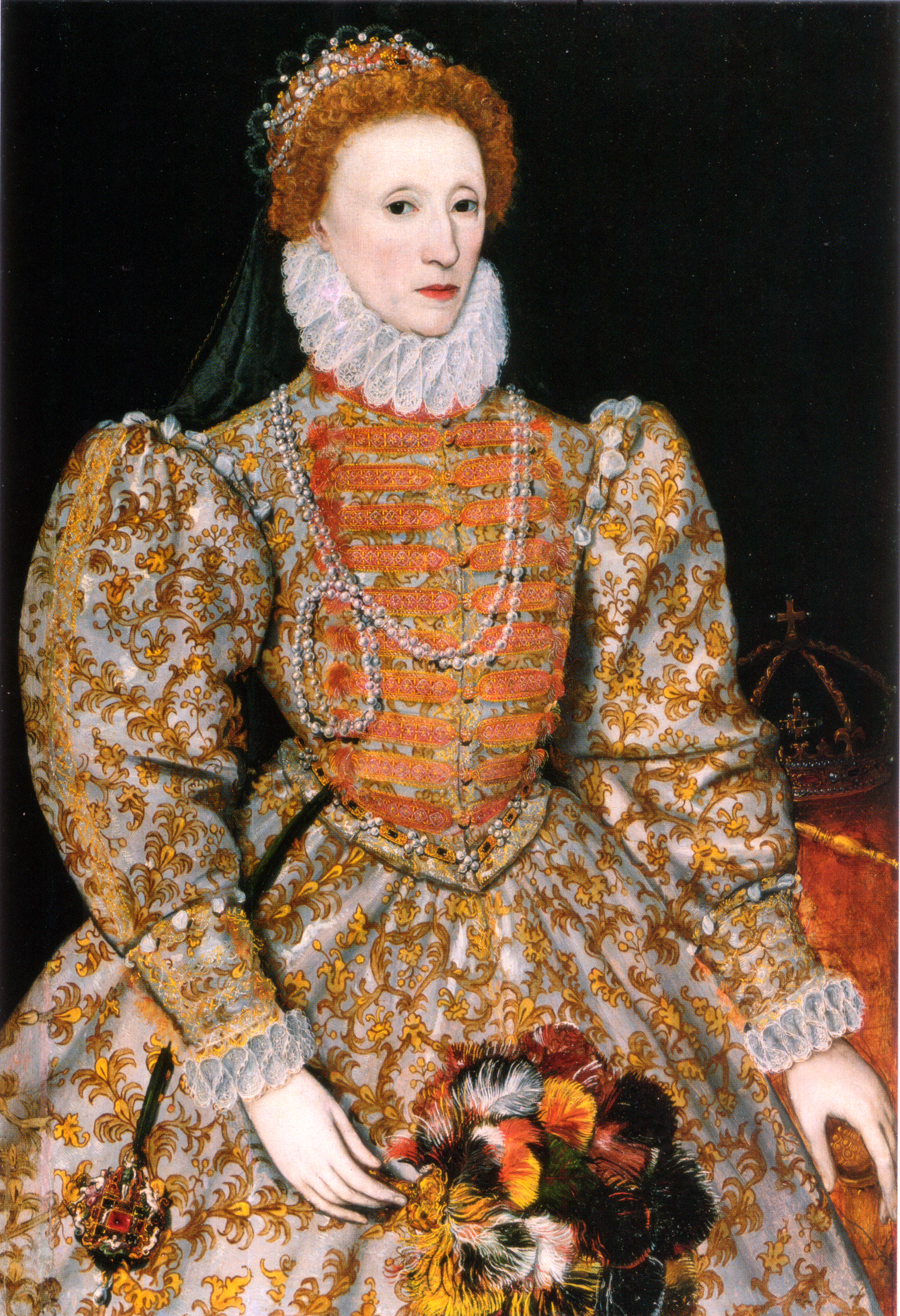
Alžbeta I. z dynastie Tudorovcov bola v rokoch 1558 až 1603 kráľovná Anglicka a Írska. Jej vláda bola obdobím rozkvetu umenia, ktoré sa označuje ako takzvaná alžbetínska renesancia.
Narodila sa v Greenwichi ako dcéra Henricha VIII. a Anny Boleynovej. Dostalo sa jej vynikajúceho vzdelania. Bola ovplyvnená reformistickými názormi svojich tútorov, ale vo veciach náboženstva sa naučila riadiť vlastným rozumom.
Kráľovnou sa stala 17. novembra 1558 ako dvadsaťpäťročná. V predchádzajúcich dvoch obdobiach sa striedali perzekúcie a popravy najskôr katolíkov, potom protestantov. Tento fakt nijako Anglicku neprospel a Alžbeta musela dať dokopy zahraničnú politiku a i vnútroštátne záležitosti.
Po jej boku stál jej radca William Cecil. Ten roku 1559 predložil parlamentu Nový zákon o supremácii, ktorý obnovoval panovníkovo cirkevné vodcovstvo a tiež protestantské vyznanie podľa Cranmerovej Knihy modlitieb z roku 1552. Panovník dostal titul „najvyšší správca“ anglickej cirkvi. V roku 1563 bolo schválených 39 článkov Thomasa Cranmera – základ anglikánskej doktríny – zakladajúcich sa na 42 článkoch z roku 1552. Pápež Pius V. Alžbetu v roku 1570 exkomunikoval a tá na to zareagovala odvolaním anglického veľvyslanca z Pápežského štátu. Reforma anglickej cirkvi sa dovŕšila zákonom o jednote z roku 1571, ktorý ukladal všetkým duchovným v štáte prijať 39 článkov. Wikipedia
“I will make you shorter by the head.”
Response to Parliament (October 1566).
Speech to the Troops at Tilbury (1588)
Kontext: I know I have the body but of a weak and feeble woman; but I have the heart and stomach of a king, and of a king of England too, and think foul scorn that Parma or Spain, or any prince of Europe, should dare to invade the borders of my realm.
Response to Parliament (October 1566).
“God may forgive you, but I never can.”
To the Countess of Nottingham, as quoted in The History of England Under the House of Tudor (1759) by David Hume, Vol. II, Ch. 7.
“[I] would rather be a beggar and single than a queen and married.”
Statement to the envoy of Ulrich, Duke of Württemberg while discussing a proposal of marriage to the duke's son, Christoph. (26 January 1563), quoted by J. Horace Round in "A Visit to Queen Elizabeth," http://books.google.com/books?id=iP0CAAAAIAAJ&q=%22would+rather+be+a+beggar+and+single+than+a+queen+and+married%22&pg=PA629#v=onepage The Nineteenth Century magazine (October 1896)
The Golden Speech (1601)
To Robert Cecil when he said, in her final illness (March 1603), that she must go to bed.
The Golden Speech (1601)
Speech to a joint delegation of the House of Lords and the House of Commons (5 November 1566), quoted in Leah Marcus, Janel Mueller and Mary Rose (eds.), Elizabeth I: Collected Works (The University of Chicago Press, 2002), p. 95.
“This is the Lord's doing, and it is marvellous in our eyes.”
Her reaction when she was told she was Queen (17 November 1558).
The Golden Speech (1601)
Response to Parliament (October 1566).
Speech to Parliament (10 April 1593), quoted in Leah Marcus, Janel Mueller and Mary Rose (eds.), Elizabeth I: Collected Works (The University of Chicago Press, 2002), p. 332.
Elizabeth I of England On Monsieur's Departure
"On Monsieur's Departure" (February 1582).
Speech to the Troops at Tilbury (1588)
Letter to Edward Seymour, Lord Protector (28 January 1549), quoted in Leah Marcus, Janel Mueller and Mary Rose (eds.), Elizabeth I: Collected Works (The University of Chicago Press, 2002), p. 24.
Elizabeth I of England On Monsieur's Departure
"On Monsieur's Departure" (February 1582).
“I would not open windows into men's souls.”
Oral tradition, possibly originating in a letter drafted for her by Francis Bacon. http://books.google.co.uk/books?id=nkJad0EYVxIC&pg=PA104#v=onepage&q&f=false http://books.google.co,/books?id=0yA-MQLwOtEC&pg=PA104#v=onepage&q&f=false
Letter to Amias Paulet (August 1586), the gaoler of Mary, Queen of Scots, quoted in Leah Marcus, Janel Mueller and Mary Rose (eds.), Elizabeth I: Collected Works (The University of Chicago Press, 2002), p. 284.
“Anger makes dull men witty, but it keeps them poor.”
To Sir Edward Dyer, as quoted in Apophthegms (1625) by Francis Bacon
“Much suspected by me,
Nothing proved can be,
Quoth Elizabeth prisoner.”
Written with a diamond on her window at Woodstock (1555), published in Acts and Monuments (1563) by John Foxe.
“If thy heart fails thee, climb not at all.”
Rhyming response written on a windowpane beneath Sir Walter Raleigh's writing: "Fain would I climb, yet fear I to fall." As quoted in The History of the Worthies of England (1662) by Thomas Fuller
“Those who touch the sceptres of princes deserve no pity.”
Remarks to the French ambassador on Charles de Gontaut, duc de Biron's rebellion against Henry IV of France (c. July 1602), quoted in J. E. Neale, Queen Elizabeth [1934] (1942), p. 364


