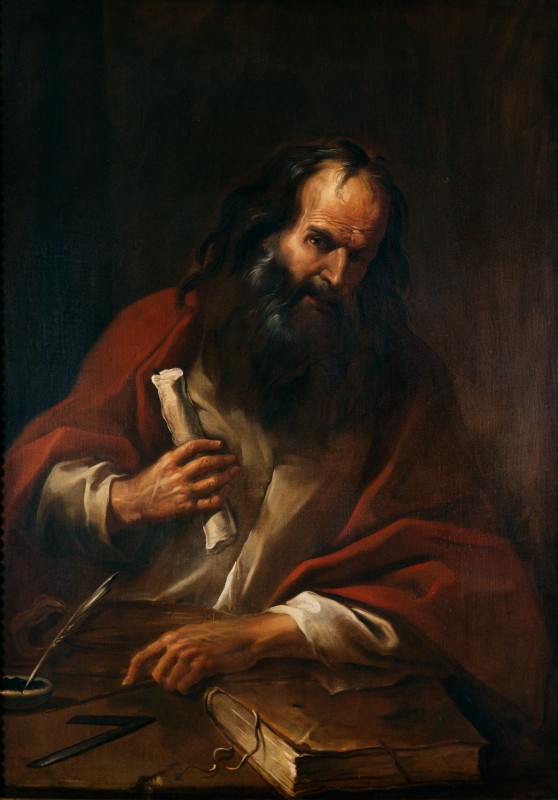
Eukleides z Alexandrie citáty

Eukleides z Alexandrie/z Kyrény/z Kýrény , najčastejšie známy ako Euklides, bol starogrécky matematik.

O Euklidovom živote vieme iba málo. Panuje názor že žil za čias Ptolemaia I. a možno práve on položil základy matematického bádania v alexandrijskom Museione.

Jeho najznámejším dielom sú Základy , v ktorom spresnil deduktívne chápanie matematiky, založené na definíciách, všeobecných pojmoch, t. j. na súhrne princípov, ktoré dnes označujeme ako axiómy, a na vzájomne od seba nezávislých postulátoch.

Z Euklidových postulátov je najznámejší posledný, piaty, že bodom v rovine možno viesť len jednu rovnobežku k danej priamke: mnohí sa totiž tento postulát pokúšali odvodiť z predchádzajúcich.

Celé dielo Základy pojednáva o rovinnej geometrii, teórii čísiel a priestorovej geometrii . Toto chápanie geometrie bez námietok platilo až do 19. storočia.

Euklides napísal aj Optiku, v ktorej sa zaoberá perspektívou, a jeho meno sa spája i s Katoptrikou, v ktorej rozoberá odraz od zrkadiel, no dnešní historici sa domnievajú, že nie je autorom tejto knihy.

Euklides študoval v platónskej akadémii v Aténach a neskôr pôsobil v Alexandrii. Wikipedia  

✵ 323 pred n. l. – 285 pred n. l.
Eukleides z Alexandrie fotka
Eukleides z Alexandrie: 6 citátov0 Páči sa

Eukleides z Alexandrie: Citáty v angličtine

“The laws of nature are but the mathematical thoughts of God.”

Euclid

The earliest published source found on google books that attributes this to Euclid is A Mathematical Journey by Stanley Gudder (1994), p. xv http://books.google.com/books?id=UiOxd2-lfGsC&amp;q=%22mathematical+thoughts%22+euclid#search_anchor. However, many earlier works attribute it to Johannes Kepler, the earliest located being in the piece &quot;The Mathematics of Elementary Chemistry&quot; by Principal J. McIntosh of Fowler Union High School in California, which appeared in School Science and Mathematics, Volume VII ( 1907 http://books.google.com/books?id=kAEUAAAAIAAJ&amp;pg=PR3#v=onepage&amp;q&amp;f=false), p. 383 http://books.google.com/books?id=kAEUAAAAIAAJ&amp;pg=PA383#v=onepage&amp;q&amp;f=false. Neither this nor any other source located gives a source in Kepler&#x27;s writings, however, and in an earlier source, the 1888 Notes and Queries, Vol V., it is attributed on p. 165 http://books.google.com/books?id=0qYXAQAAMAAJ&amp;pg=PA165#v=onepage&amp;q&amp;f=false to Plato. It could possibly be a paraphrase of either or both of the following to comments in Kepler&#x27;s 1618 book Harmonices Mundi (The Harmony of the World)&#x27;: &quot;Geometry is one and eternal shining in the mind of God&quot; and &quot;Since geometry is co-eternal with the divine mind before the birth of things, God himself served as his own model in creating the world&quot;. <br class="br">Misattributed

“There is no royal road to geometry.”
Non est regia ad Geometriam via.

Euclid

μὴ εἶναι βασιλικὴν ἀτραπὸν ἐπί γεωμετρίαν, Non est regia [inquit Euclides] ad Geometriam via <br class="br">Reply given when the ruler Ptolemy I Soter asked Euclid if there was a shorter road to learning geometry than through Euclid&#x27;s Elements.The &quot;Royal Road&quot; was the road built across Anatolia and Persia by Darius I which allowed rapid communication and troop movement, but use of ἀτραπός (rather than ὁδός) conveys the connotation of &quot;short cut&quot;. <br class="br">The Greek is from Proclus (412–485 AD) in Commentary on the First Book of Euclid&#x27;s Elements, the Latin translation is by Francesco Barozzi, 1560) the English translation follows Glenn R. Morrow (1970), p. 57 http://books.google.com/books?id=JZEHj2fEmqAC&amp;q=royal#v=snippet&amp;q=royal&amp;f=false. <br class="br">Attributed

“Give him threepence, since he must make gain out of what he learns.”

Euclid

Said to be a remark made to his servant when a student asked what he would get out of studying geometry. <br class="br">&#x27;threepence&#x27; renders τριώβολον &quot;three-obol-piece&quot;. This amount increases the sarcasm of Euclid&#x27;s reply, as it was the standard fee of a Dikastes for attending a court case (μίσθος δικαστικός), thus inverting the role of teacher and pupil to that of accused and juror. <br class="br">The English translation is by The History of Greek Mathematics by Thomas Little Heath (1921), p. 357 http://books.google.com/books?id=h4JsAAAAMAAJ&amp;pg=PA357#v=onepage&amp;q&amp;f=false. The quote is recorded by Stobaeus&#x27; Florilegium iv, 114 ( ed. Teubner 1856 http://www.archive.org/stream/iohannisstobaei00meingoog#page/n598/mode/2up, p. 205; see also here http://laudatortemporisacti.blogspot.ch/2011/04/anecdote-about-euclid.html). Stobaeus attributes the anecdote to Serenus. <br class="br">Attributed

“Which was to be proved.”

Euclid kniha Elements

Elements, Book I, Proposition 4.
Latin translation: Quod erat demonstrandum (often abbreviated Q.E.D.).
Euclid’s Elements

“And the whole [is] greater than the part.”

Euclid kniha Elements

Καὶ τὸ ὅλον τοῦ μέρους μεῖζον
ἐστιν
Elements, Book I, Common Notion 8 (5 in certain editions)
Cf. Aristotle, Metaphysics, Book Η 1045a 8–10: "… the totality is not, as it were, a mere heap, but the whole is something besides the parts … [πάντων γὰρ ὅσα πλείω μέρη ἔχει καὶ μὴ ἔστιν οἷον σωρὸς τὸ πᾶν]"
Euclid’s Elements

“A prime number is one (which is) measured by a unit alone.”

Euclid kniha Elements

Elements, Book 7, Definition 11 (12 in certain editions)
Euclid’s Elements